End-to-end application
Designing ChordLib: Crafting an All-in-One Learning & Community Experience for Aspiring Musicians
ROLE
UX Designer
EXPERTISE
UX/UI Design
YEAR
2025


Project Overview
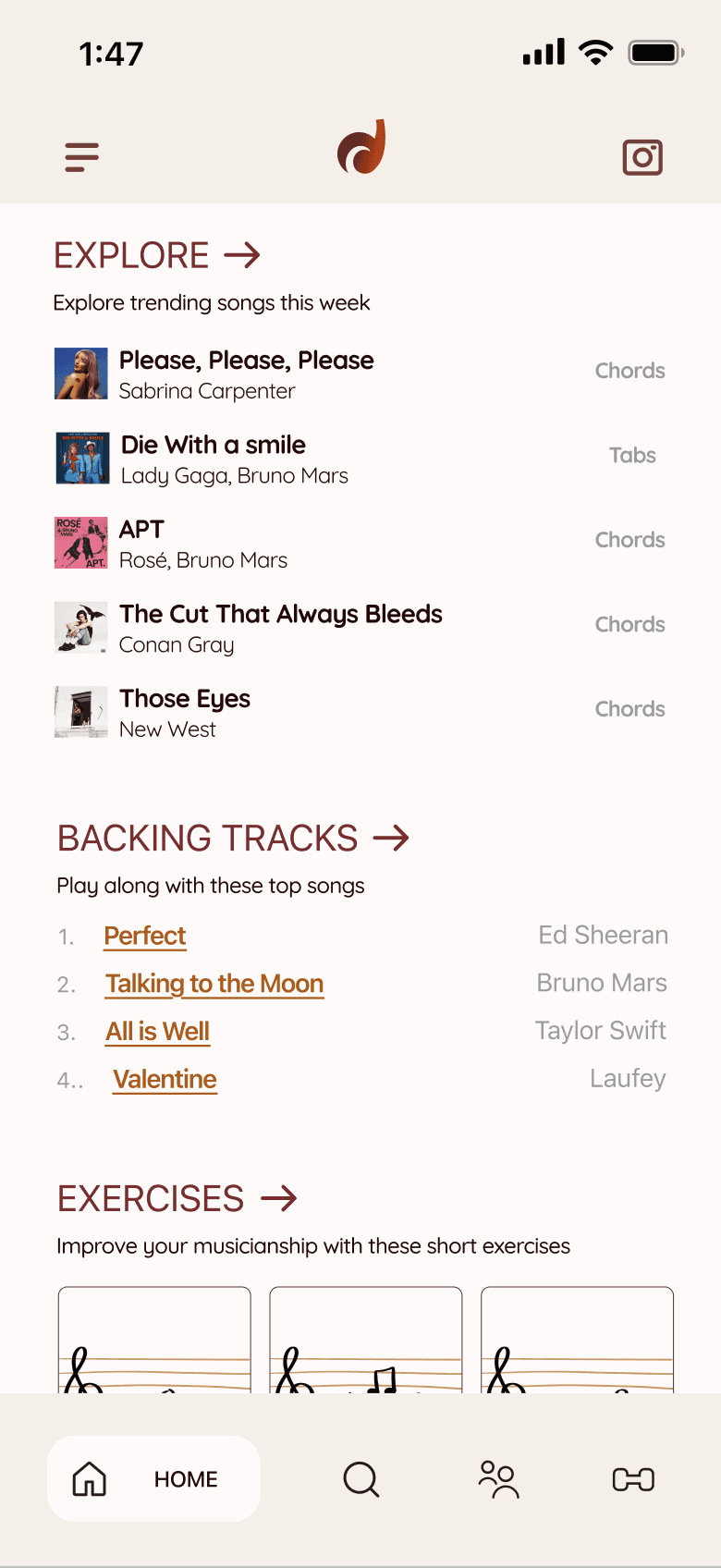
ChordLib is a multi-instrument learning and community platform designed for musicians of all skill levels. The app provides interactive chord libraries, targeted music exercises, and progress-tracking tools to help users master instruments like guitar, bass, ukulele, and piano. Beyond structured learning, ChordLib integrates a social component where users can share short videos of their playing, engage with others, and receive feedback. This project focused on designing a seamless and engaging end-to-end user experience that blends education, practice, and community to support the growth of modern musicians.
Background
Problem
Learning a new instrument can be overwhelming—especially for self-taught musicians. Frustration from mistakes, unrealistic expectations, and lack of guidance often lead to a drop in motivation. While many turn to digital tools for help, most platforms either require a paid subscription or rely heavily on self-directed practice, making it harder for learners to stay engaged and improve consistently.
Research Goals
To understand how musicians of varying skill levels learn new instruments and engage with music communities in order to design an intuitive, motivating, and collaborative learning experience.
Objectives
Competitive Analysis
To shape ChordLib’s direction, I explored what leading platforms like Yousician, Simply Piano, and Ultimate Guitar were doing well—and where they fell short. This competitive analysis revealed key gaps in community, flexibility, and multi-instrument support, helping me identify clear opportunities to design a more connected and holistic learning experience for musicians.

User Interviews
To truly understand the needs and pain points of musicians learning new instruments, I conducted interviews with a diverse group of aspiring and intermediate players—guitarists, pianists, bassists, and ukulele enthusiasts. These conversations revealed not only the challenges they face with existing apps but also their desire for a learning experience that combines practical tools with community support.
Participants are
Ages 21-35
Experienced or interested in learning instruments online
Users who play two or more instruments


Affinity Map
To make sense of the insights gathered from my user interviews, I created an affinity map that helped organize key themes around the musicians' experiences. The categories that emerged—Platform, Convenience, Motivations, Self-discovery, Goals, and Music Recording/Producing Features—paint a vivid picture of their journey.

User Persona


Site Map
Designing the sitemap for ChordLib was about more than organizing features—it was about crafting a smooth, inspiring journey for self-taught musicians. By mapping each section to real user needs—like structured learning, motivation, and community—we built an intuitive flow that supports consistent practice and creative connection from the first tap.

User Flows


Wireframes


Brand Identity
— COLOR PALETTE

— Brand logo


UI Design

Usability Test

Iteration
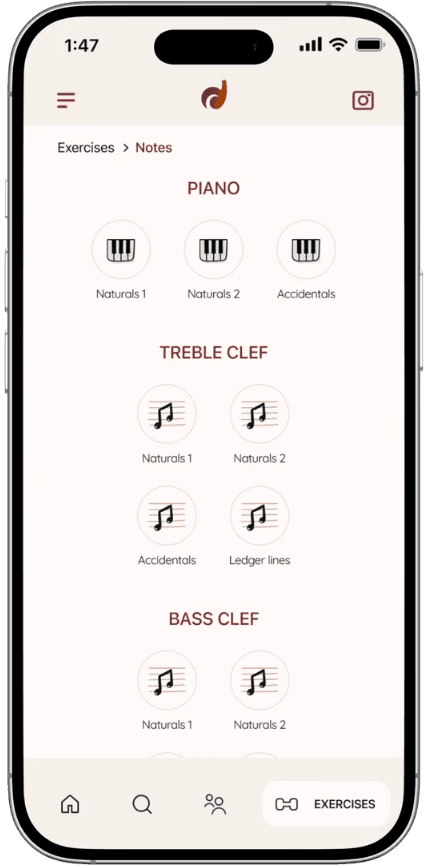
A key takeaway from usability testing was the need for hints or a cheat sheet to support beginners. This raised an important question: how can we guide users with little to no music knowledge toward the correct answer? In response, I introduced brief, clear instructions to make the experience more intuitive and beginner-friendly.

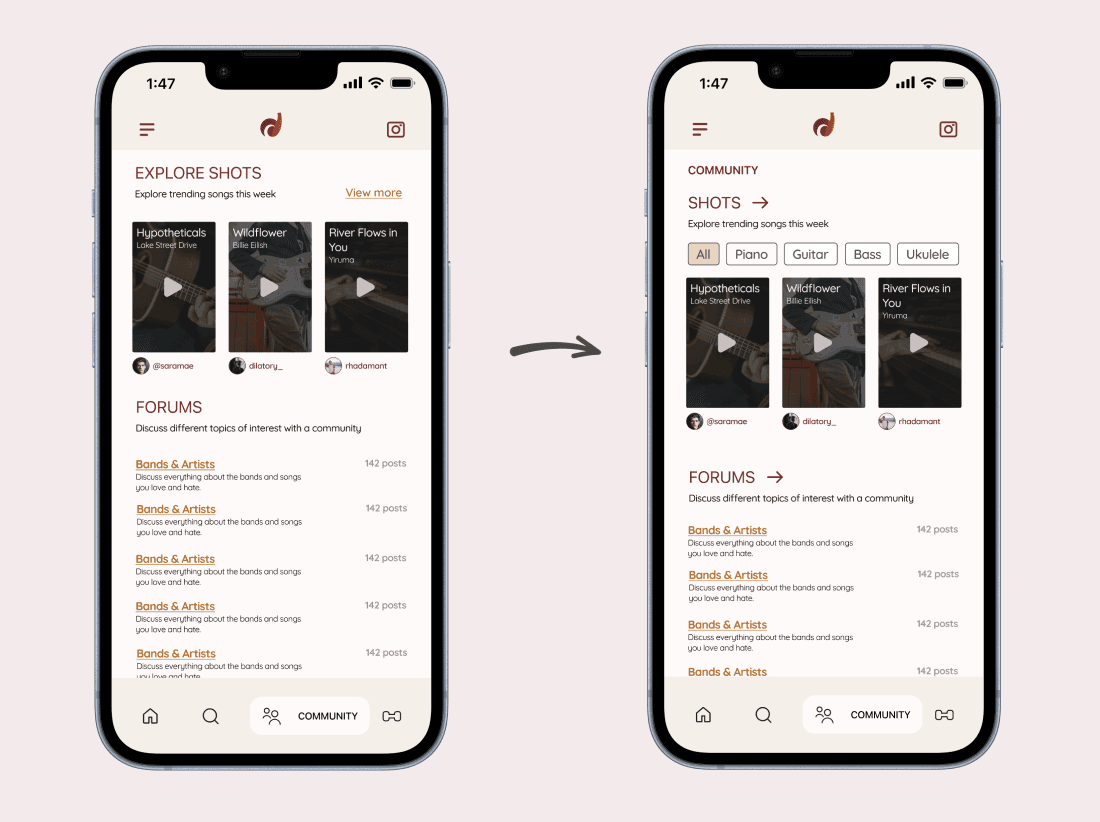
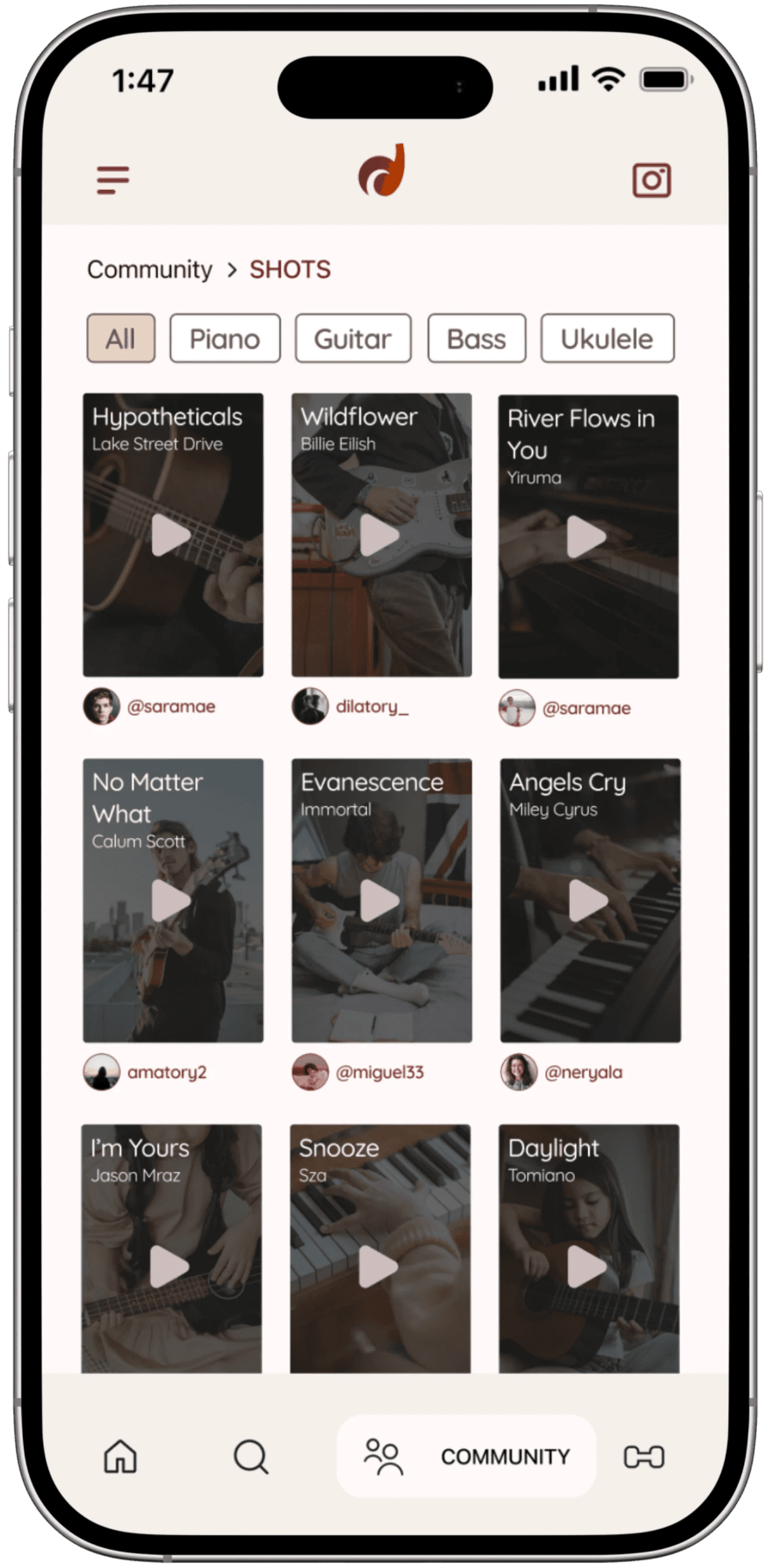
Another key iteration was adding filter buttons directly to the initial community page, rather than limiting them to the full videos page. Users wanted quicker access to specific content, and this change allows them to sort and explore practice clips more efficiently without extra navigation, making the experience more seamless and engaging from the start.
To create a clearer first impression, I simplified the homepage and rearranged content to highlight the brand’s core priorities. This made the layout more focused and aligned the experience with what matters most to users and the brand
